
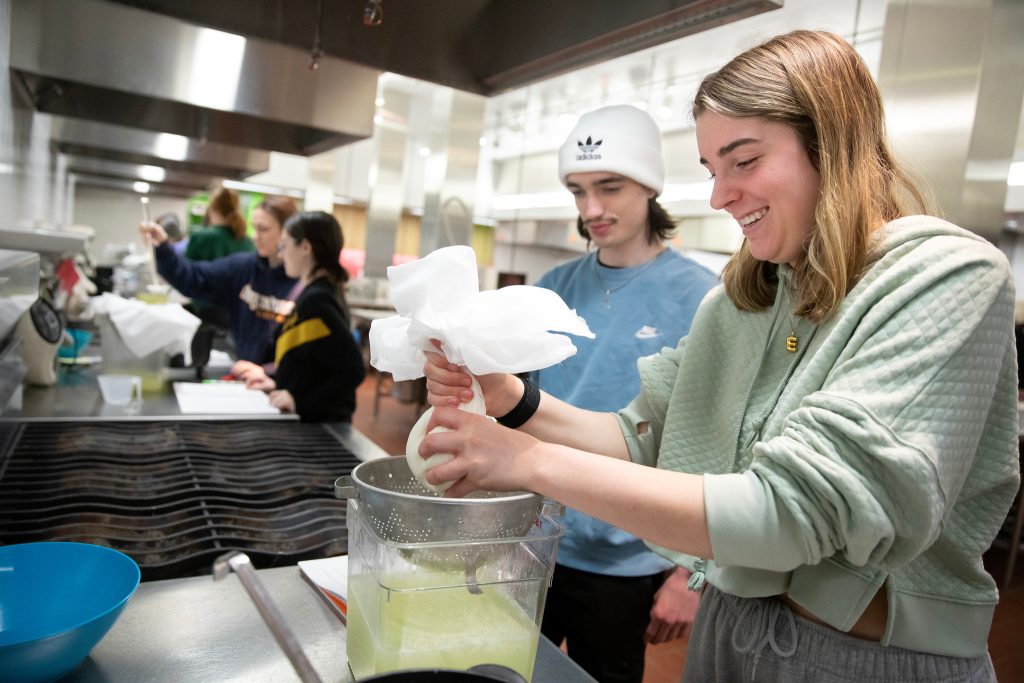
Food science is the chemistry, physics, microbiology, and engineering behind the analysis, processing, and manufacturing of food. It’s important for human health, but also the planet’s health, too. Food science helps us solve today’s global and local food problems, such as hunger, food waste, sustainability, and food safety.
What will I learn in food science?
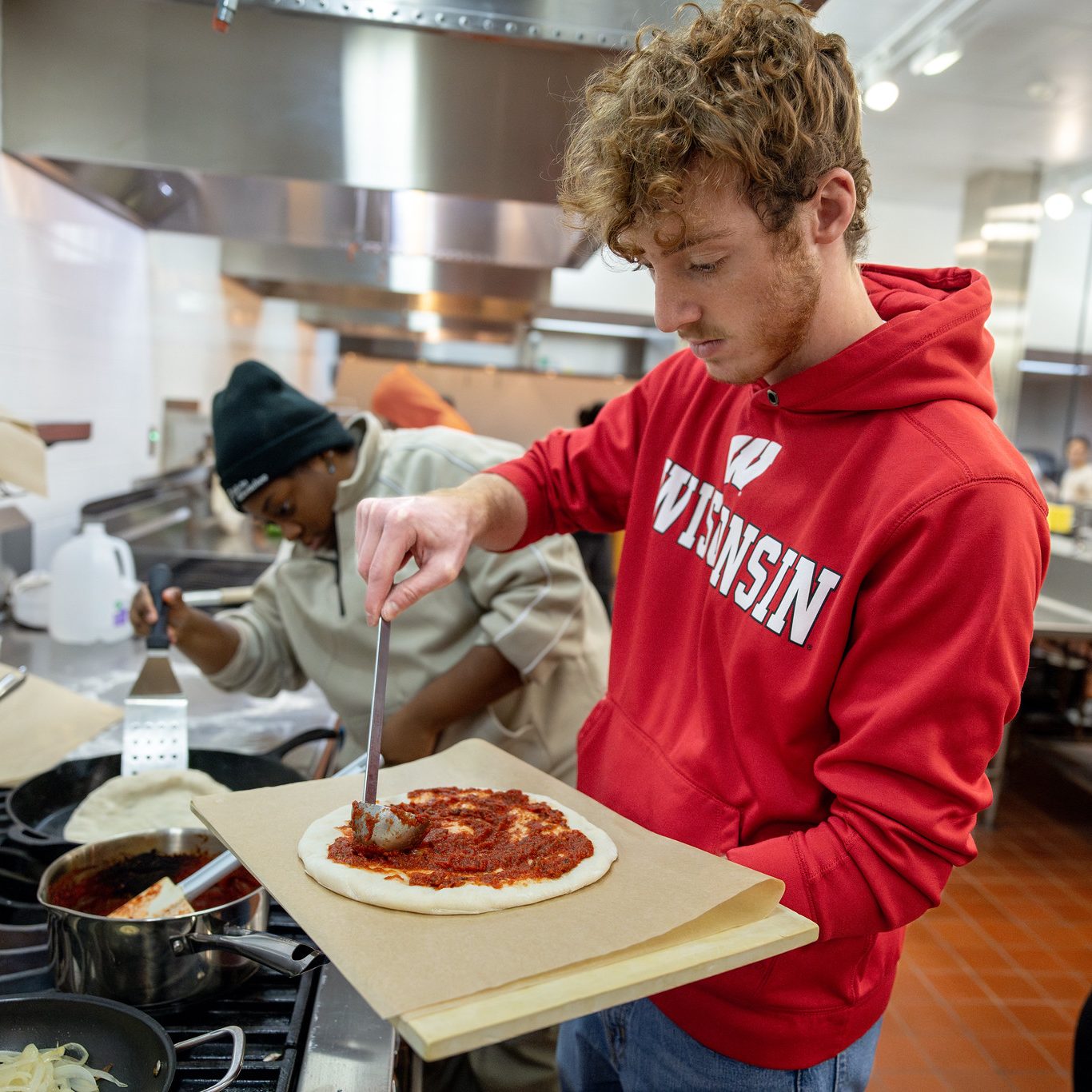
As a food science student, you’ll learn the science behind the chemical, physical, and microbiological properties of food in addition to the ins-and-outs of food production, processing, preparation, distribution, and evaluation. You’ll be able to explore different aspects of food science with hands-on lab courses on dairy, candy, meat, and fermented foods in the state-of-the-art Food Application Laboratory.
What can I do with a food science major?
With nearly 100% job placement, food science graduates are equipped to compete and succeed in today’s global economy. Food science graduates are prepared for careers with corporations, government agencies, and nonprofits in product development, quality assurance and control, processing and engineering, technical sales, management, research, sensory analysis, and food law and regulations.
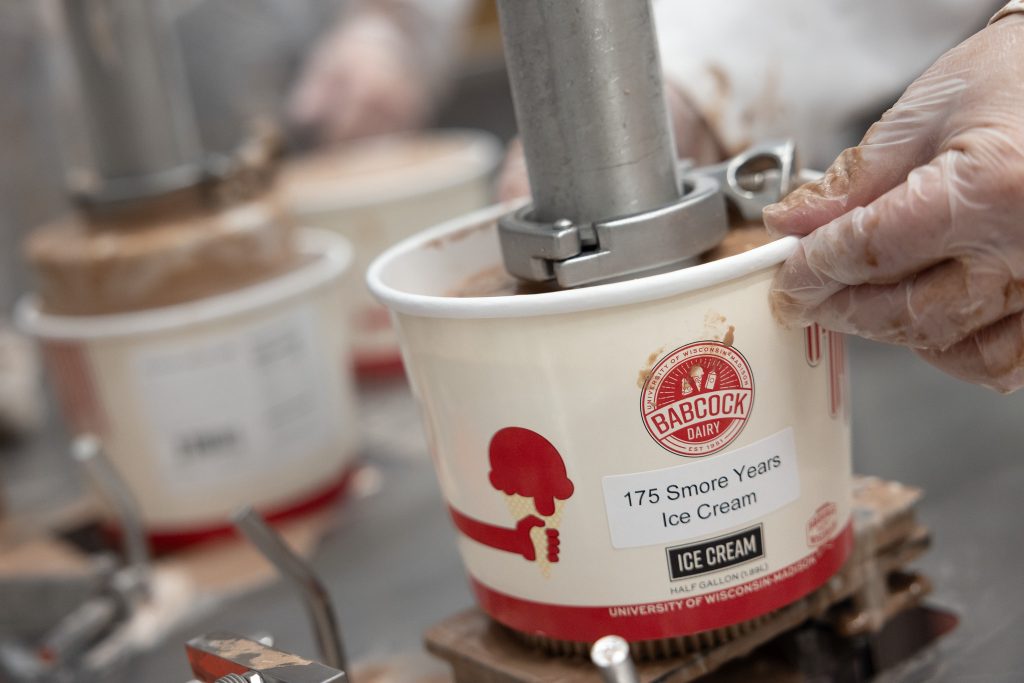
Did you know that UW–Madison has its very own dairy plant? The Babcock Dairy Plant, located in Babcock Hall, produces cheese and ice cream right here on campus. Food science students have access to hands-on experiences at the Babcock Dairy Plant through student jobs, apprenticeships, and internships.
What can I do on campus?
Get involved in the lab
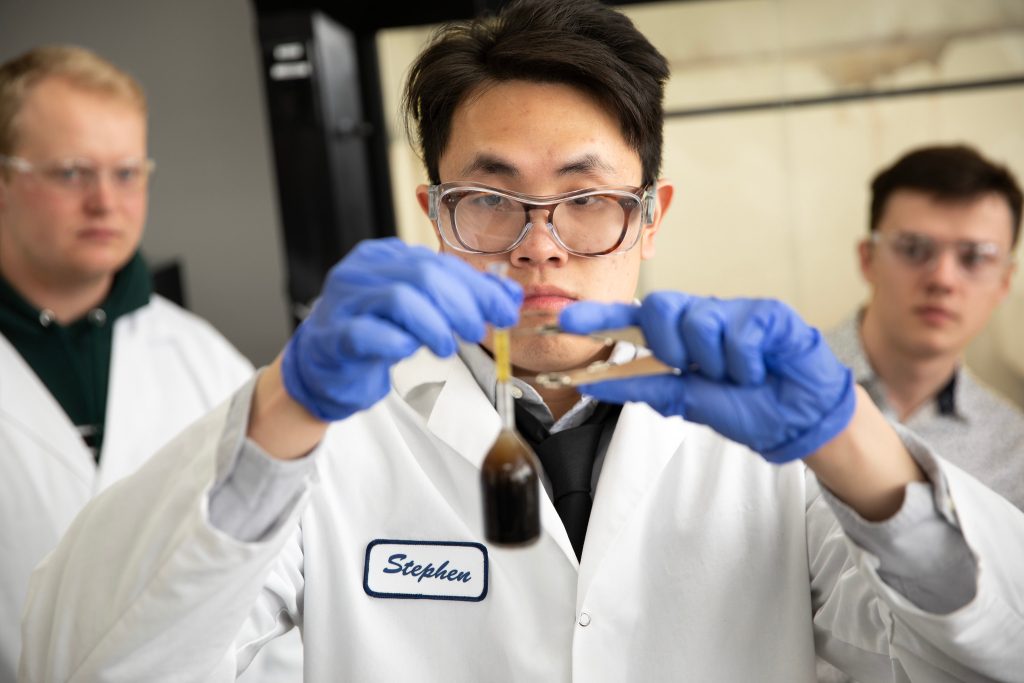
100% of food science students are involved in research! Join a faculty lab and conduct mentored or independent research in areas such as food quality, microbiology, chemistry, sustainability, and food and health.
Join a student organization
Make friends, develop leadership skills, compete in competitions, and learn new things in student organizations and extracurriculars! The Department of Food and Nutritional Sciences sponsors two student organizations and three competitive teams.
Advising
FAQ
Your courses will teach you the science behind the chemical, physical, and microbiological properties of food in addition to the ins-and-outs of food production, processing, preparation, distribution, and evaluation. The Guide has additional information on specific course and elective options.
Yes! With advanced planning, food science students can study abroad and graduating within four years. CALS Study Abroad has additional information for CALS students who are interested in studying abroad.
Yes! The department awards around $50,000 through numerous scholarships every academic year. The CALS Scholarships and Awards page has additional information on how to apply for scholarships.