
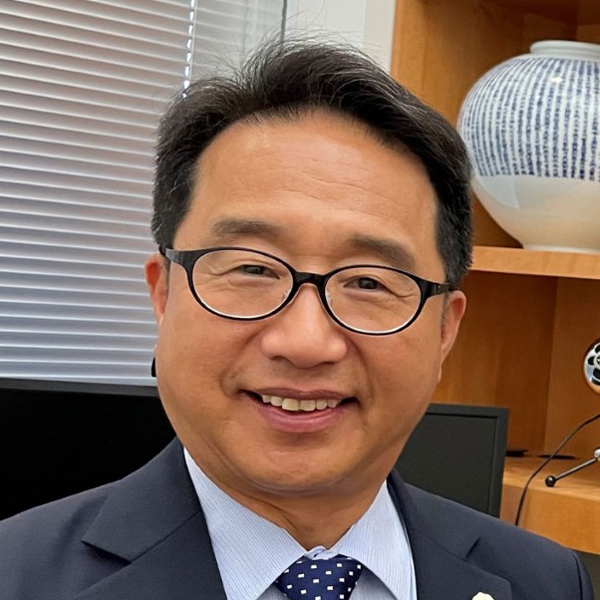
Jae-Hyuk Yu
Professor of Bacteriology
Fungi and Mycotoxins Detoxification of Mycotoxins Development of Broad-Spectrum Antimicrobials Molecular Genetics of Fungal Biology
(608) 262-4696
3155 Microbial Sciences Building
- Velvet regulators as master integrators of development, metabolism, and pathogenicity in filamentous fungi February 23, 2026 Wanping Chen, Ye-Eun Son, He-Jin Cho, Yonghua Wang, Hee-Soo Park, Jae-Hyuk Yu Microbiology and molecular biology reviews : MMBR
- Divergent volatile metabolomes and flavor attributes in rice fermented by Aspergillus oryzae and Aspergillus flavus February 12, 2026 Colin O McCarthy, Dasol Choi, Alissa A Nolden, Eric A Decker, Jae-Hyuk Yu, John G Gibbons Frontiers in fungal biology
- Genome-Wide Mapping Reveals an Extensive AtfA Regulatory Influence on Development, Metabolism, and Stress Preparedness in Aspergillus nidulans December 24, 2025 Márton Miskei, Sandugash Ibragimova, Beatrix Kocsis, Tibor Nagy, Hee-Soo Park, Tamás Emri, Jae-Hyuk Yu, Éva Leiter, István Pócsi Cells
- Population-Specific Transcriptomic Shifts Underlie Secondary Metabolic Diversification in Aspergillus flavus and the Domestication of Aspergillus oryzae November 19, 2025 Milton T Drott, Yen-Wen Wang, E Anne Hatmaker, Nayanna M Mercado-Soto, J Mitch Elmore, Dianiris Luciano-Rosaro, Jae-Hyuk Yu, Antonis Rokas, John G Gibbons, Anna Huttenlocher, Kunlong Yang, Nancy P Keller bioRxiv : the preprint server for biology
- The GATA Transcription Factor NsdD Regulates Vegetative Growth, Asexual Sporulation, and Melanin Biosynthesis in Colletotrichum siamense and C. graminicola November 8, 2025 Jinhong Wang, Shuangzhen Zhou, Ying Zhang, Shaoyuan Lin, Jae-Hyuk Yu, Zhiqiang Liu, Xiaoyu Li Phytopathology
- Strain-specific activation of aspergillic acid biosynthesis in Aspergillus oryzae NRRL 3483 November 5, 2025 Dasol Choi, Xingrui Fan, Hee-Soo Park, Jae-Hyuk Yu Scientific reports
- Comprehensive Review of Dietary Probiotics in Reducing Aflatoxin B1 Toxicity October 28, 2025 Dasol Choi, Xingrui Fan, Jae-Hyuk Yu Toxins
- Species-specific gene regulatory network rewiring mediated by the GATA-type regulator NsdD in Aspergillus July 3, 2025 Heungyun Moon, Mi-Kyung Lee, Junha Shin, Sung Chul Park, Julio C Rivera Vazquez, Daniel Amador-Noguez, Nancy P Keller, Hee-Soo Park, Kap-Hoon Han, Jae-Hyuk Yu mBio
- The hyphae-specific C2H2 transcription factor HscA regulates development, stress response, and mycotoxin production in Aspergillus species June 10, 2025 Ye-Eun Son, Kyu-Hyun Kim, He-Jin Cho, Jae-Hyuk Yu, Hee-Soo Park mSphere
- Role of the LAMMER kinase LkhA in fungal development and aflatoxin production in Aspergillus flavus June 5, 2025 Seong-Hwan Jeong, He-Jin Cho, Jae-Hyuk Yu, Hee-Moon Park, Hee-Soo Park Journal of microbiology (Seoul, Korea)
- Potent Antimicrobial Activity of Aspergillus oryzae Fermentate Against Toxigenic Strains of Clostridioides difficile April 29, 2025 Ahmad Alshannaq, Morgan Henning, Jonah Dixon, Colleen Riley, Dasol Choi, Jae-Hyuk Yu, Nasia Safdar Antibiotics (Basel, Switzerland)
- Population Genomics of Aspergillus sojae is Shaped by the Food Environment April 8, 2025 Kimberly L Acevedo, Elizabeth Eaton, Julia Leite, Shu Zhao, Katherine Chacon-Vargas, Colin M McCarthy, Dasol Choi, Samuel O’Donnell, Emile Gluck-Thaler, Jae-Hyuk Yu, John G Gibbons Genome biology and evolution
- Evaluation of basil essential oils for antifungal and anti-aflatoxigenic activity against Aspergillus flavus February 20, 2025 Maryam Ajmal, Aneela Nijabat, Iqra Sajjad, Syda Zahra Haider, Wendy Bedale, Jae-Hyuk Yu, Muhammad Anwer Shah, Celestin Ukozehasi, Maha Abdullah Alwaili, Amr Elkelish Scientific reports
- Characterization of Blue Light Receptors LreA and LreB in Aspergillus flavus February 13, 2025 Hye-Min Park, Ye-Eun Son, He-Jin Cho, Jae-Hyuk Yu, Hee-Soo Park Journal of microbiology and biotechnology
- The food fermentation fungus Aspergillus oryzae is a source of natural antimicrobials against Listeria monocytogenes February 13, 2025 Zepeng Tu, Dasol Choi, Yuxing Chen, Jae-Hyuk Yu, TuAnh N Huynh Journal of dairy science
- Broad-spectrum antimicrobial activities of a food fermentate of Aspergillus oryzae October 22, 2024 Dasol Choi, Ahmad F Alshannaq, Yohan Bok, Jae-Hyuk Yu Microbiology spectrum
- Proteomic characterization of peanut flour fermented by Rhizopus oryzae August 15, 2024 Christopher P Mattison, Rebecca A Dupre, Kristen Clermont, John G Gibbons, Jae-Hyuk Yu Heliyon
- Safe and effective degradation of aflatoxins by food-grade culture broth of Aspergillus oryzae July 16, 2024 Dasol Choi, Ahmad F Alshannaq, Jae-Hyuk Yu PNAS nexus
- Comprehensive review of clean-label antimicrobials used in dairy products January 29, 2024 Dasol Choi, Wendy Bedale, Suraj Chetty, Jae-Hyuk Yu Comprehensive reviews in food science and food safety
- Phylogenomics analysis of velvet regulators in the fungal kingdom January 5, 2024 Wanping Chen, Ye-Eun Son, He-Jin Cho, Dasol Choi, Hee-Soo Park, Jae-Hyuk Yu Microbiology spectrum
- Functional, transcriptomic, and lipidomic studies of the choC gene encoding a phospholipid methyltransferase in Aspergillus fumigatus November 27, 2023 Jiao Pan, Xinyu Yang, Cuiting Hu, Tongtong Fu, Xiuyan Zhang, Zijun Liu, Yu Wang, Fengyu Zhang, Xiaoyuan He, Jae-Hyuk Yu Microbiology spectrum
- The MYST Family Histone Acetyltransferase SasC Governs Diverse Biological Processes in Aspergillus fumigatus November 24, 2023 Jae-Yoon Kwon, Young-Ho Choi, Min-Woo Lee, Jae-Hyuk Yu, Kwang-Soo Shin Cells
- The novel spore-specific regulator SscA controls Aspergillus conidiogenesis September 14, 2023 Ye-Eun Son, Jae-Hyuk Yu, Hee-Soo Park mBio
- Functional characterization of genes encoding cadmium pumping P1B-type ATPases in Aspergillus fumigatus and Aspergillus nidulans September 7, 2023 Ildikó Vig, Zsigmond Benkő, Barnabás Cs Gila, Zoltán Palczert, Ágnes Jakab, Fruzsina Nagy, Márton Miskei, Mi-Kyung Lee, Jae-Hyuk Yu, István Pócsi, Tamás Emri Microbiology spectrum
- The Forkhead Gene fkhB is Necessary for Proper Development in Aspergillus nidulans August 2, 2023 Seo-Yeong Jang, Ye-Eun Son, Dong-Soon Oh, Kap-Hoon Han, Jae-Hyuk Yu, Hee-Soo Park Journal of microbiology and biotechnology
- Regulators of the Asexual Life Cycle of Aspergillus nidulans June 10, 2023 Ye-Eun Son, Jae-Hyuk Yu, Hee-Soo Park Cells
- Unraveling the Gene Regulatory Networks of the Global Regulators VeA and LaeA in Aspergillus nidulans March 15, 2023 Heungyun Moon, Mi-Kyung Lee, Ilhan Bok, Jin Woo Bok, Nancy P Keller, Jae-Hyuk Yu Microbiology spectrum
- Functional Characterization of the GNAT Family Histone Acetyltransferase Elp3 and GcnE in Aspergillus fumigatus February 11, 2023 Young-Ho Choi, Sung-Hun Park, Sung-Su Kim, Min-Woo Lee, Jae-Hyuk Yu, Kwang-Soo Shin International journal of molecular sciences
- Genome-Wide Gene Expression Analyses of the AtfA/AtfB-Mediated Menadione Stress Response in Aspergillus nidulans February 11, 2023 Beatrix Kocsis, Mi-Kyung Lee, Károly Antal, Jae-Hyuk Yu, István Pócsi, Éva Leiter, Tamás Emri Cells
- Upstream Regulation of Development and Secondary Metabolism in Aspergillus Species January 8, 2023 Heungyun Moon, Kap-Hoon Han, Jae-Hyuk Yu Cells
- The Putative C2H2 Transcription Factor VadH Governs Development, Osmotic Stress Response, and Sterigmatocystin Production in Aspergillus nidulans December 23, 2022 Xiaoyu Li, Yanxia Zhao, Heungyun Moon, Jieyin Lim, Hee-Soo Park, Zhiqiang Liu, Jae-Hyuk Yu Cells
- Comprehensive Review of Aflatoxin Contamination, Impact on Health and Food Security, and Management Strategies in Pakistan December 22, 2022 Maryam Ajmal, Wendy Bedale, Abida Akram, Jae-Hyuk Yu Toxins
- Functional analysis of the bZIP-type transcription factors AtfA and AtfB in Aspergillus nidulans October 7, 2022 Beatrix Kocsis, Mi-Kyung Lee, Jae-Hyuk Yu, Tibor Nagy, Lajos Daróczi, Gyula Batta, István Pócsi, Éva Leiter Frontiers in microbiology
- Regulation of Conidiogenesis in Aspergillus flavus September 23, 2022 He-Jin Cho, Sung-Hun Son, Wanping Chen, Ye-Eun Son, Inhyung Lee, Jae-Hyuk Yu, Hee-Soo Park Cells
- The velvet-activated putative C6 transcription factor VadZ regulates development and sterigmatocystin production in Aspergillus nidulans June 6, 2022 Yanxia Zhao, Mi-Kyung Lee, Jieyin Lim, Heungyun Moon, Hee-Soo Park, Weifa Zheng, Jae-Hyuk Yu Fungal biology
- Editorial: From Traditional to Modern: Progress of Molds and Yeasts in Fermented-Food Production April 11, 2022 Wanping Chen, Xucong Lv, Van-Tuan Tran, Jun-Ichi Maruyama, Kap-Hoon Han, Jae-Hyuk Yu Frontiers in microbiology
- Characterization of 260 Isolates of Aspergillus Section Flavi Obtained from Sesame Seeds in Punjab, Pakistan February 24, 2022 Maryam Ajmal, Ahmad F Alshannaq, Heungyun Moon, Dasol Choi, Abida Akram, Brian Gagosh Nayyar, John G Gibbons, Jae-Hyuk Yu Toxins
- AtfA-Independent Adaptation to the Toxic Heavy Metal Cadmium in Aspergillus nidulans August 7, 2021 Tamás Emri, Barnabás Gila, Károly Antal, Fanni Fekete, Heungyun Moon, Jae-Hyuk Yu, István Pócsi Microorganisms
- Comparison of Two Aspergillus oryzae Genomes From Different Clades Reveals Independent Evolution of Alpha-Amylase Duplication, Variation in Secondary Metabolism Genes, and Differences in Primary Metabolism July 30, 2021 Katherine Chacón-Vargas, Colin O McCarthy, Dasol Choi, Long Wang, Jae-Hyuk Yu, John G Gibbons Frontiers in microbiology
- The putative sensor histidine kinase VadJ coordinates development and sterigmatocystin production in Aspergillus nidulans July 5, 2021 Yanxia Zhao, Mi-Kyung Lee, Jieyin Lim, Heungyun Moon, Hee-Soo Park, Weifa Zheng, Jae-Hyuk Yu Journal of microbiology (Seoul, Korea)
- Characterization of the asexual developmental genes brlA and wetA in Monascus ruber M7 May 7, 2021 Lili Jia, Jae-Hyuk Yu, Fusheng Chen, Wanping Chen Fungal genetics and biology : FG & B
- Characterization of the mbsA Gene Encoding a Putative APSES Transcription Factor in Aspergillus fumigatus April 30, 2021 Yong-Ho Choi, Sang-Cheol Jun, Min-Woo Lee, Jae-Hyuk Yu, Kwang-Soo Shin International journal of molecular sciences
- The DUG Pathway Governs Degradation of Intracellular Glutathione in Aspergillus nidulans February 27, 2021 Barnabás Csaba Gila, Heungyun Moon, Károly Antal, Márton Hajdu, Réka Kovács, Andrea P Jónás, Tünde Pusztahelyi, Jae-Hyuk Yu, István Pócsi, Tamás Emri Applied and environmental microbiology
- Transcriptomic, Protein-DNA Interaction, and Metabolomic Studies of VosA, VelB, and WetA in Aspergillus nidulans Asexual Spores February 10, 2021 Ming-Yueh Wu, Matthew E Mead, Mi-Kyung Lee, George F Neuhaus, Donovon A Adpressa, Julia I Martien, Ye-Eun Son, Heungyun Moon, Daniel Amador-Noguez, Kap-Hoon Han, Antonis Rokas, Sandra Loesgen, Jae-Hyuk Yu, Hee-Soo Park mBio
- Analysis of E.U. Rapid Alert System (RASFF) Notifications for Aflatoxins in Exported U.S. Food and Feed Products for 2010-2019 February 3, 2021 Ahmad Alshannaq, Jae-Hyuk Yu Toxins
- Development of a novel homogeneous immunoassay using the engineered luminescent enzyme NanoLuc for the quantification of the mycotoxin fumonisin B1 January 13, 2021 Tawfiq Alsulami, Nidhi Nath, Rod Flemming, Hui Wang, Wenhui Zhou, Jae-Hyuk Yu Biosensors & bioelectronics
- Complete mitochondrial genome sequence of Afla-Guard®, commercially available non-toxigenic Aspergillus flavus December 28, 2020 Jongsun Park, Mi-Kyung Lee, Jae-Hyuk Yu, Jong-Hwa Kim, Kap-Hoon Han Mitochondrial DNA. Part B, Resources
- Complete mitochondrial genome sequence of Aspergillus flavus SRRC1009: insight of intraspecific variations on A. flavus mitochondrial genomes December 28, 2020 Jongsun Park, Mi-Kyung Lee, Jae-Hyuk Yu, Bohan Zhu, Jong-Hwa Kim, Kap-Hoon Han Mitochondrial DNA. Part B, Resources
- Revised Transcriptome-Based Gene Annotation for Aspergillus flavus Strain NRRL 3357 December 4, 2020 E Anne Hatmaker, Xiaofan Zhou, Matthew E Mead, Heungyun Moon, Jae-Hyuk Yu, Antonis Rokas Microbiology resource announcements
- The Putative APSES Transcription Factor RgdA Governs Growth, Development, Toxigenesis, and Virulence in Aspergillus fumigatus November 12, 2020 Sang-Cheol Jun, Yong-Ho Choi, Min-Woo Lee, Jae-Hyuk Yu, Kwang-Soo Shin mSphere
- Heterotrimeric G-protein signalers and RGSs in Aspergillus fumigatus October 31, 2020 Hee-Soo Park, Min-Ju Kim, Jae-Hyuk Yu, Kwang-Soo Shin Pathogens (Basel, Switzerland)
- Velvet activated McrA plays a key role in cellular and metabolic development in Aspergillus nidulans September 16, 2020 Mi-Kyung Lee, Ye-Eun Son, Hee-Soo Park, Ahmad Alshannaq, Kap-Hoon Han, Jae-Hyuk Yu Scientific reports
- Comparative Analysis, Structural Insights, and Substrate/Drug Interaction of CYP128A1 in Mycobacterium tuberculosis July 12, 2020 Nokwanda Samantha Ngcobo, Zinhle Edith Chiliza, Wanping Chen, Jae-Hyuk Yu, David R Nelson, Jack A Tuszynski, Jordane Preto, Khajamohiddin Syed International journal of molecular sciences
- More P450s Are Involved in Secondary Metabolite Biosynthesis in Streptomyces Compared to Bacillus, Cyanobacteria, and Mycobacterium July 11, 2020 Fanele Cabangile Mnguni, Tiara Padayachee, Wanping Chen, Dominik Gront, Jae-Hyuk Yu, David R Nelson, Khajamohiddin Syed International journal of molecular sciences
- Increased Cd2+ biosorption capability of Aspergillus nidulans elicited by crpA deletion May 26, 2020 Imre Boczonádi, Zsófia Török, Ágnes Jakab, Gábor Kónya, Klaudia Gyurcsó, Edina Baranyai, Zoltán Szoboszlai, Boglárka Döncző, István Fábián, Éva Leiter, Mi-Kyung Lee, László Csernoch, Jae-Hyuk Yu, Zsófia Kertész, Tamás Emri, István Pócsi Journal of basic microbiology
- The role of the VosA-repressed dnjA gene in development and metabolism in Aspergillus species February 16, 2020 Ye-Eun Son, He-Jin Cho, Wanping Chen, Sung-Hun Son, Mi-Kyung Lee, Jae-Hyuk Yu, Hee-Soo Park Current genetics
- A Liquid Chromatographic Method for Rapid and Sensitive Analysis of Aflatoxins in Laboratory Fungal Cultures February 6, 2020 Ahmad F Alshannaq, Jae-Hyuk Yu Toxins
- Nitric oxide as a developmental and metabolic signal in filamentous fungi January 23, 2020 Yanxia Zhao, Jieyin Lim, Jianyang Xu, Jae-Hyuk Yu, Weifa Zheng Molecular microbiology
- Comprehensive Analyses of Cytochrome P450 Monooxygenases and Secondary Metabolite Biosynthetic Gene Clusters in Cyanobacteria January 23, 2020 Makhosazana Jabulile Khumalo, Nomfundo Nzuza, Tiara Padayachee, Wanping Chen, Jae-Hyuk Yu, David R Nelson, Khajamohiddin Syed International journal of molecular sciences
- The velvet Regulator VosA Governs Survival and Secondary Metabolism of Sexual Spores in Aspergillus nidulans January 23, 2020 Min-Ju Kim, Mi-Kyung Lee, Huy Quang Pham, Myeong Ju Gu, Bohan Zhu, Sung-Hun Son, Dongyup Hahn, Jae-Ho Shin, Jae-Hyuk Yu, Hee-Soo Park, Kap-Hoon Han Genes
- Transcriptomic and Functional Studies of the RGS Protein Rax1 in Aspergillus fumigatus January 8, 2020 Yong-Ho Choi, Min-Woo Lee, Olumuyiwa Ayokunle Igbalajobi, Jae-Hyuk Yu, Kwang-Soo Shin Pathogens (Basel, Switzerland)
- RgsA Attenuates the PKA Signaling, Stress Response, and Virulence in the Human Opportunistic Pathogen Aspergillus fumigatus November 14, 2019 Hnin Phyu Lwin, Yong-Ho Choi, Min-Woo Lee, Jae-Hyuk Yu, Kwang-Soo Shin International journal of molecular sciences
- The velvet repressed vidA gene plays a key role in governing development in Aspergillus nidulans August 30, 2019 Min-Ju Kim, Won-Hee Jung, Ye-Eun Son, Jae-Hyuk Yu, Mi-Kyung Lee, Hee-Soo Park Journal of microbiology (Seoul, Korea)
- Effects of Different G-Protein α-Subunits on Growth, Development and Secondary Metabolism of Monascus ruber M7 July 30, 2019 Ming Lei, Jiao Liu, Yang Fang, Yanchun Shao, Li Li, Jae-Hyuk Yu, Fusheng Chen Frontiers in microbiology
- Distribution and Diversity of Cytochrome P450 Monooxygenases in the Fungal Class Tremellomycetes June 16, 2019 Olufunmilayo Olukemi Akapo, Tiara Padayachee, Wanping Chen, Abidemi Paul Kappo, Jae-Hyuk Yu, David R Nelson, Khajamohiddin Syed International journal of molecular sciences
- Cytochrome P450 Monooxygenase CYP139 Family Involved in the Synthesis of Secondary Metabolites in 824 Mycobacterial Species June 5, 2019 Puleng Rosinah Syed, Wanping Chen, David R Nelson, Abidemi Paul Kappo, Jae-Hyuk Yu, Rajshekhar Karpoormath, Khajamohiddin Syed International journal of molecular sciences
- Cytochrome P450 Monooxygenase-Mediated Metabolic Utilization of Benzo[a]Pyrene by Aspergillus Species May 30, 2019 Erin M Ostrem Loss, Mi-Kyung Lee, Ming-Yueh Wu, Julia Martien, Wanping Chen, Daniel Amador-Noguez, Colin Jefcoate, Christina Remucal, Seunho Jung, Sun-Chang Kim, Jae-Hyuk Yu mBio
- Pentynyl Ether of β-Cyclodextrin Polymer and Silica Micro-Particles: A New Hybrid Material for Adsorption of Phenanthrene from Water April 12, 2019 Jae Min Choi, Daham Jeong, Eunae Cho, Jae-Hyuk Yu, Muhammad Nazir Tahir, Seunho Jung Polymers
- Efficient Adsorption on Benzoyl and Stearoyl Cellulose to Remove Phenanthrene and Pyrene from Aqueous Solution April 10, 2019 Yohan Kim, Daham Jeong, Kyeong Hui Park, Jae-Hyuk Yu, Seunho Jung Polymers
- Similarities, variations, and evolution of cytochrome P450s in Streptomyces versus Mycobacterium March 10, 2019 Louisa Moshoeshoe Senate, Martin Phalane Tjatji, Kayla Pillay, Wanping Chen, Ntokozo Minenhle Zondo, Puleng Rosinah Syed, Fanele Cabangile Mnguni, Zinhle Edith Chiliza, Hans Denis Bamal, Rajshekhar Karpoormath, Thandeka Khoza, Samson Sitheni Mashele, Jonathan Michael Blackburn, Jae-Hyuk Yu, David R Nelson, Khajamohiddin Syed Scientific reports
- RgsD negatively controls development, toxigenesis, stress response, and virulence in Aspergillus fumigatus January 30, 2019 Young Kim, Min-Woo Lee, Sang-Cheol Jun, Yong-Ho Choi, Jae-Hyuk Yu, Kwang-Soo Shin Scientific reports
- Genome Sequence of the Extremely Acidophilic Fungus Acidomyces richmondensis FRIK2901 December 12, 2018 Matthew D Rosienski, Mi-Kyung Lee, Jae-Hyuk Yu, Charles W Kaspar, John G Gibbons Microbiology resource announcements
- Comparative Analyses of Cytochrome P450s and Those Associated with Secondary Metabolism in Bacillus Species November 21, 2018 Bongumusa Comfort Mthethwa, Wanping Chen, Mathula Lancelot Ngwenya, Abidemi Paul Kappo, Puleng Rosinah Syed, Rajshekhar Karpoormath, Jae-Hyuk Yu, David R Nelson, Khajamohiddin Syed International journal of molecular sciences
- Controlling aflatoxin contamination and propagation of Aspergillus flavus by a soy-fermenting Aspergillus oryzae strain November 17, 2018 Ahmad F Alshannaq, John G Gibbons, Mi-Kyung Lee, Kap-Hoon Han, Seung-Beom Hong, Jae-Hyuk Yu Scientific reports
- Characterization of the velvet regulators in Aspergillus flavus October 27, 2018 Tae-Jin Eom, Heungyun Moon, Jae-Hyuk Yu, Hee-Soo Park Journal of microbiology (Seoul, Korea)
- Systematic Dissection of the Evolutionarily Conserved WetA Developmental Regulator across a Genus of Filamentous Fungi August 23, 2018 Ming-Yueh Wu, Matthew E Mead, Mi-Kyung Lee, Erin M Ostrem Loss, Sun-Chang Kim, Antonis Rokas, Jae-Hyuk Yu mBio
- Bioremediation and microbial metabolism of benzo(a)pyrene July 12, 2018 Erin M Ostrem Loss, Jae-Hyuk Yu Molecular microbiology
- Blooming of Unusual Cytochrome P450s by Tandem Duplication in the Pathogenic Fungus Conidiobolus coronatus June 13, 2018 Mathula Lancelot Ngwenya, Wanping Chen, Albert Kotze Basson, Jabulani Siyabonga Shandu, Jae-Hyuk Yu, David R Nelson, Khajamohiddin Syed International journal of molecular sciences
- The Novel Small Molecule STK899704 Promotes Senescence of the Human A549 NSCLC Cells by Inducing DNA Damage Responses and Cell Cycle Arrest May 2, 2018 Chan-Woo Park, Yesol Bak, Min-Je Kim, Ganipisetti Srinivasrao, Joonsung Hwang, Nak K Sung, Bo Yeon Kim, Jae-Hyuk Yu, Jin Tae Hong, Do-Young Yoon Frontiers in pharmacology
- Comparative analyses and structural insights of the novel cytochrome P450 fusion protein family CYP5619 in Oomycetes April 28, 2018 Hans Denis Bamal, Wanping Chen, Samson Sitheni Mashele, David R Nelson, Abidemi Paul Kappo, Rebamang Anthony Mosa, Jae-Hyuk Yu, Jack A Tuszynski, Khajamohiddin Syed Scientific reports
- Lipid Biosynthesis as an Antifungal Target April 21, 2018 Jiao Pan, Cuiting Hu, Jae-Hyuk Yu Journal of fungi (Basel, Switzerland)
- Characteristics of a Regulator of G-Protein Signaling (RGS) rgsC in Aspergillus fumigatus November 8, 2017 Young Kim, In-Beom Heo, Jae-Hyuk Yu, Kwang-Soo Shin Frontiers in microbiology
- Transcriptome-Based Modeling Reveals that Oxidative Stress Induces Modulation of the AtfA-Dependent Signaling Networks in Aspergillus nidulans August 4, 2017 Erzsébet Orosz, Károly Antal, Zoltán Gazdag, Zsuzsa Szabó, Kap-Hoon Han, Jae-Hyuk Yu, István Pócsi, Tamás Emri International journal of genomics
- Diversity, Application, and Synthetic Biology of Industrially Important Aspergillus Fungi July 23, 2017 Hee-Soo Park, Sang-Cheol Jun, Kap-Hoon Han, Seung-Beom Hong, Jae-Hyuk Yu Advances in applied microbiology
- MybA, a transcription factor involved in conidiation and conidial viability of the human pathogen Aspergillus fumigatus July 6, 2017 Isabel Valsecchi, Özlem Sarikaya-Bayram, Joanne Wong Sak Hoi, Laetitia Muszkieta, John Gibbons, Marie-Christine Prevost, Adeline Mallet, Jacomina Krijnse-Locker, Oumaima Ibrahim-Granet, Isabelle Mouyna, Paul Carr, Michael Bromley, Vishukumar Aimanianda, Jae-Hyuk Yu, Antonis Rokas, Gerhard H Braus, Cosmin Saveanu, Özgür Bayram, Jean Paul Latgé Molecular microbiology
- WetA bridges cellular and chemical development in Aspergillus flavus June 29, 2017 Ming-Yueh Wu, Matthew E Mead, Sun-Chang Kim, Antonis Rokas, Jae-Hyuk Yu PloS one
- Occurrence, Toxicity, and Analysis of Major Mycotoxins in Food June 14, 2017 Ahmad Alshannaq, Jae-Hyuk Yu International journal of environmental research and public health
- The role of VosA/VelB-activated developmental gene vadA in Aspergillus nidulans May 9, 2017 Hee-Soo Park, Mi-Kyung Lee, Sun Chang Kim, Jae-Hyuk Yu PloS one
- High molecular weight genomic DNA mini-prep for filamentous fungi April 22, 2017 Mi-Kyung Lee, Hee-Soo Park, Kap-Hoon Han, Seung-Beom Hong, Jae-Hyuk Yu Fungal genetics and biology : FG & B
- Characterization of the rax1 gene encoding a putative regulator of G protein signaling in Aspergillus fumigatus April 22, 2017 Olumuyiwa Ayokunle Igbalajobi, Jae-Hyuk Yu, Kwang-Soo Shin Biochemical and biophysical research communications
- SERS-Based Flavonoid Detection Using Ethylenediamine-β-Cyclodextrin as a Capturing Ligand March 25, 2017 Jae Min Choi, Eunil Hahm, Kyeonghui Park, Daham Jeong, Won-Yeop Rho, Jaehi Kim, Dae Hong Jeong, Yoon-Sik Lee, Sung Ho Jhang, Hyun Jong Chung, Eunae Cho, Jae-Hyuk Yu, Bong-Hyun Jun, Seunho Jung Nanomaterials (Basel, Switzerland)
- Solubility and bioavailability enhancement of ciprofloxacin by induced oval-shaped mono-6-deoxy-6-aminoethylamino-β-cyclodextrin March 8, 2017 Jae Min Choi, Kyeonghui Park, Benel Lee, Daham Jeong, Someshwar D Dindulkar, Youngjin Choi, Eunae Cho, Seyeon Park, Jae-Hyuk Yu, Seunho Jung Carbohydrate polymers
- Comparative genomics reveals high biological diversity and specific adaptations in the industrially and medically important fungal genus Aspergillus February 16, 2017 Ronald P de Vries, Robert Riley, Ad Wiebenga, Guillermo Aguilar-Osorio, Sotiris Amillis, Cristiane Akemi Uchima, Gregor Anderluh, Mojtaba Asadollahi, Marion Askin, Kerrie Barry, Evy Battaglia, Özgür Bayram, Tiziano Benocci, Susanna A Braus-Stromeyer, Camila Caldana, David Cánovas, Gustavo C Cerqueira, Fusheng Chen, Wanping Chen, Cindy Choi, Alicia Clum, Renato Augusto Corrêa Dos Santos, André Ricardo de Lima Damásio, George Diallinas, Tamás Emri, Erzsébet Fekete, Michel Flipphi, Susanne Freyberg, Antonia Gallo, Christos Gournas, Rob Habgood, Matthieu Hainaut, María Laura Harispe, Bernard Henrissat, Kristiina S Hildén, Ryan Hope, Abeer Hossain, Eugenia Karabika, Levente Karaffa, Zsolt Karányi, Nada Kraševec, Alan Kuo, Harald Kusch, Kurt…
- Molecular evolutionary dynamics of cytochrome P450 monooxygenases across kingdoms: Special focus on mycobacterial P450s September 13, 2016 Mohammad Parvez, Lehlohonolo Benedict Qhanya, Ntsane Trevor Mthakathi, Ipeleng Kopano Rosinah Kgosiemang, Hans Denis Bamal, Nataraj Sekhar Pagadala, Ting Xie, Haoran Yang, Hengye Chen, Chrispian William Theron, Richie Monyaki, Seiso Caiphus Raselemane, Vuyani Salewe, Bogadi Lorato Mongale, Retshedisitswe Godfrey Matowane, Sara Mohamed Hasaan Abdalla, Wool Isaac Booi, Mari van Wyk, Dedré Olivier, Charlotte E Boucher, David R Nelson, Jack A Tuszynski, Jonathan Michael Blackburn, Jae-Hyuk Yu, Samson Sitheni Mashele, Wanping Chen, Khajamohiddin Syed Scientific reports
- Characterization of gprK Encoding a Putative Hybrid G-Protein-Coupled Receptor in Aspergillus fumigatus September 2, 2016 Mun-Gu Jung, Sung Su Kim, Jae-Hyuk Yu, Kwang-Soo Shin PloS one
- Enhancing bio-availability of β-naphthoflavone by supramolecular complexation with 6,6'-thiobis(methylene)-β-cyclodextrin dimer July 31, 2016 Jae Min Choi, Eunae Cho, Benel Lee, Daham Jeong, Youngjin Choi, Jae-Hyuk Yu, Seunho Jung Carbohydrate polymers
- Aspergillus fumigatus spore proteomics and genetics reveal that VeA represses DefA-mediated DNA damage response July 30, 2016 Kwang-Soo Shin, Hee-Soo Park, Young Kim, In-Beom Heo, Young Hwan Kim, Jae-Hyuk Yu Journal of proteomics
- Negative regulation and developmental competence in Aspergillus July 2, 2016 Mi-Kyung Lee, Nak-Jung Kwon, Im-Soon Lee, Seunho Jung, Sun-Chang Kim, Jae-Hyuk Yu Scientific reports
- Developmental regulators in Aspergillus fumigatus February 28, 2016 Hee-Soo Park, Jae-Hyuk Yu Journal of microbiology (Seoul, Korea)
- Promotion of adipogenesis by 15-(S)-hydroxyeicosatetraenoic acid February 25, 2016 Yong-Seok Song, Dong Hun Lee, Jae-Hyuk Yu, Deok-Kun Oh, Jin Tae Hong, Do-Young Yoon Prostaglandins & other lipid mediators
Application of Food-Grade Fungi to Safeguard Global Food Safety
The filamentous fungus Aspergillus oryzae is a GRAS (Generally Recognized as Safe) organism that has been used for thousands of years to produce various foods, including Doen-Jang, Korean traditional liquors, miso, and sake. Growing this food-grade A. oryzae fungus in different proprietary culture media made of various food ingredients led to the development of two types of novel bioproducts, termed D-Tox™ and Natural Preservative™ (NP™). D-Tox™ is an edible culture fermentate that can effectively degrade aflatoxins (AFs; the most potent carcinogen found in nature) within various foods, herbal medicines, and oil. AF detoxification involves opening the AF lactone ring followed by decarboxylation and further fragmentation of the toxin into nontoxic substances. NP™ products are also edible food fermentates that can effectively control a broad range of food-borne pathogenic bacteria, at least 10 different MRSA strains, and the human pathogenic fungi Aspergillus fumigatus and Candida species. Due to the significant potential of these bioproducts to safeguard global food safety and serve as novel antimicrobials, various US, Korean, and international patent applications have been filed, and several industry partners are working with us. We are currently investigating the chemical and molecular nature of D-Tox™ and NP™, and are developing various application processes and commercial products.
The Promise of Safe Food for Billions
Five Things Everyone Should Know about … Mycotoxins
Molecular genetics/genomics of fungal biology
The genus Aspergillus encompasses the most common fungi in our environment. Many Aspergillus species are beneficial to humans, but they also include serious animal and plant pathogens. Moreover, most (if not all) Aspergillus species have the ability to produce one or more toxic secondary metabolites called mycotoxins. All Aspergilli produce asexual spores as the main means of dispersion and biosynthesis of certain mycotoxins is intimately related with fungal sporulation. The primary interest of my research program is to understand how fungi coordinate growth, sporulation and toxin biosynthesis employing the model fungus Aspergillus nidulans. We showed that two antagonistic regulatory pathways govern vegetative growth and sporulation in A. nidulans. Vegetative growth is primarily mediated by a heterotrimeric G protein, which stimulates fungal growth while inhibiting asexual/sexual sporulation as well as production of the carcinogenic mycotoxin sterigmatocystin. We found that the initiation, progression and completion of sporulation are directed by the balanced activities of multiple positive and negative regulators. We are further investigating the detailed molecular mechanisms regulating these fundamental biological processes via forward/reverse genetics, genomics and biochemical analyses.
- Microbiology 305: Critical Analyses in Microbiology
- Microbiology/Oncology 545: Topics in Biotechnology
- Microbiology 810: Current Issues in Microbiology