The research interests of the Ujor Lab include fermentation science, renewable fuels and bio-chemicals, metabolic engineering/synthetic biology, bioprocess design, bioconversion of food wastes and agricultural residues to value-added products.
Sample Projects
Synthetic Biology/Metabolic Engineering
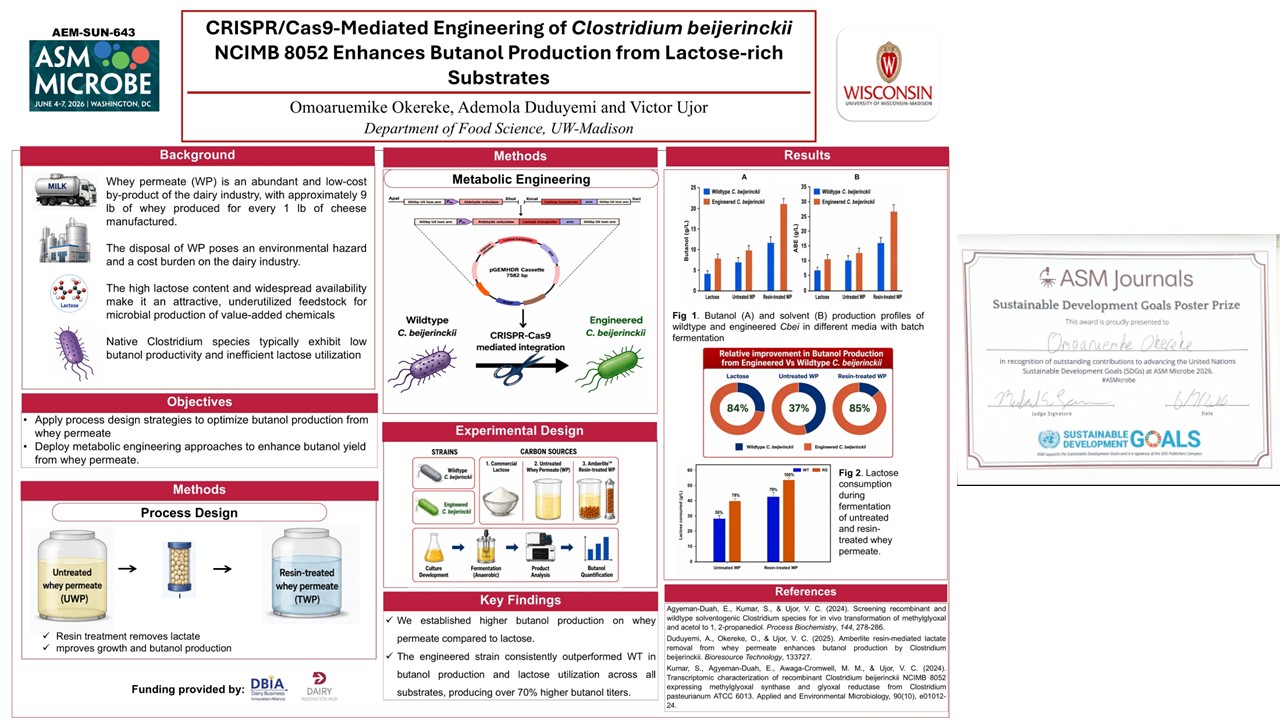
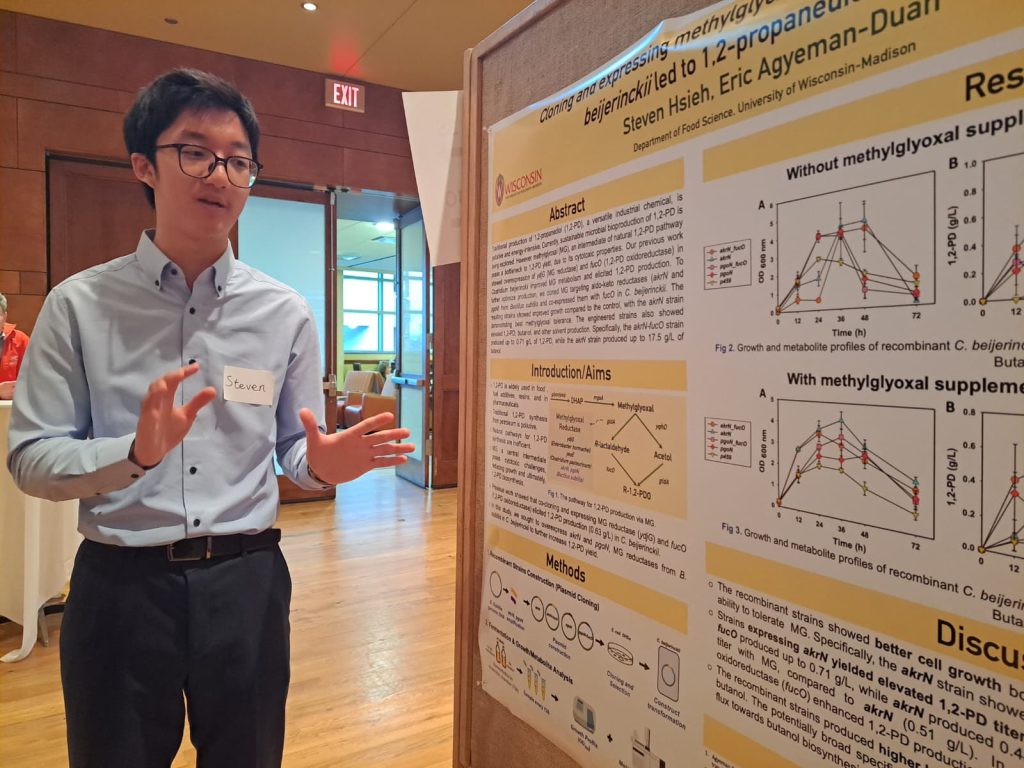
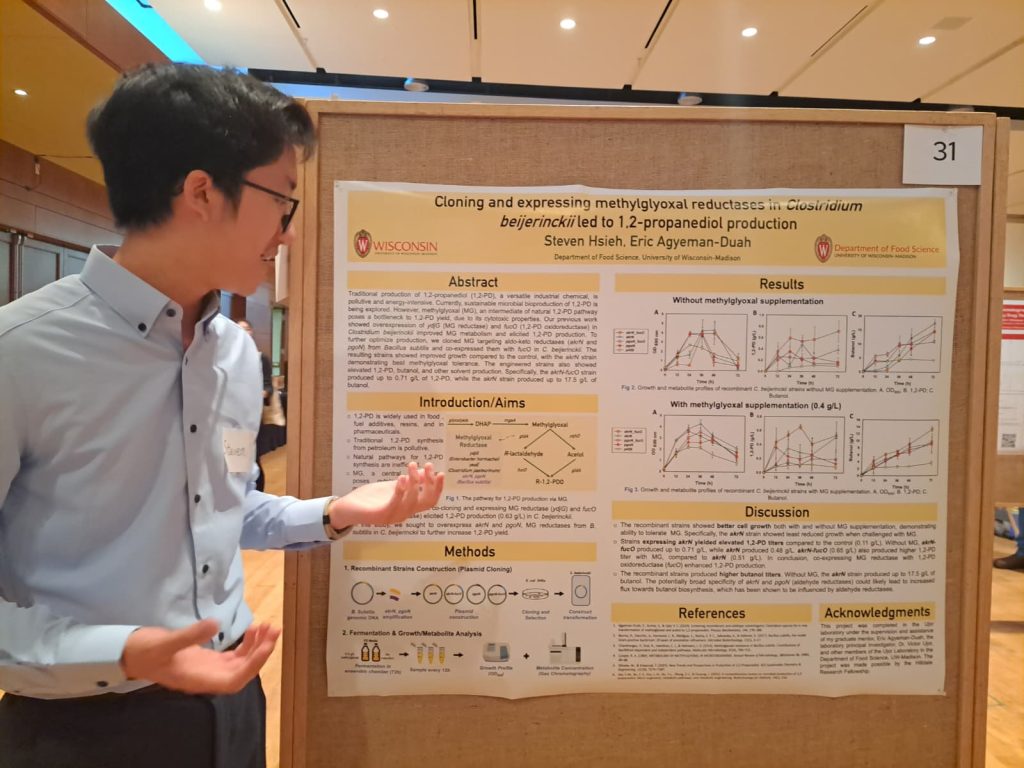
Toward enhanced bio-based chemical production, we leverage synthetic biology and metabolic engineering to design and construct robust, high-performance microbial cell factories. By systematically rewiring metabolic pathways, optimizing gene expression, and improving redox and carbon flux balance, we generate strains capable of efficiently converting renewable feedstocks into value-added chemicals. Our long-term goal is to produce bio-based chemicals at industrially relevant titers, rates, and yields.
In parallel, we investigate and address key metabolic and feedstock-associated bottlenecks that constrain biosynthesis. These include pathway inefficiencies, by-product formation, substrate inhibition, toxicity of intermediates or end products, and limitations arising from heterogeneous or lignocellulosic feedstocks. Through integrated omics analyses, adaptive laboratory evolution, and process optimization, we identify rate-limiting steps and implement targeted strategies to overcome them, thereby improving strain stability and overall process resilience.
Our work supports the sustainable production of a broad spectrum of bio-chemicals with applications spanning advanced biofuels and platform molecules used in the manufacture of paints, varnishes, synthetic rubber for tires, and a diverse range of industrial polymers. By combining fundamental metabolic insight with translational engineering approaches, we aim to advance scalable, economically viable, and environmentally responsible biomanufacturing solutions.
Repurposing Organic Effluents
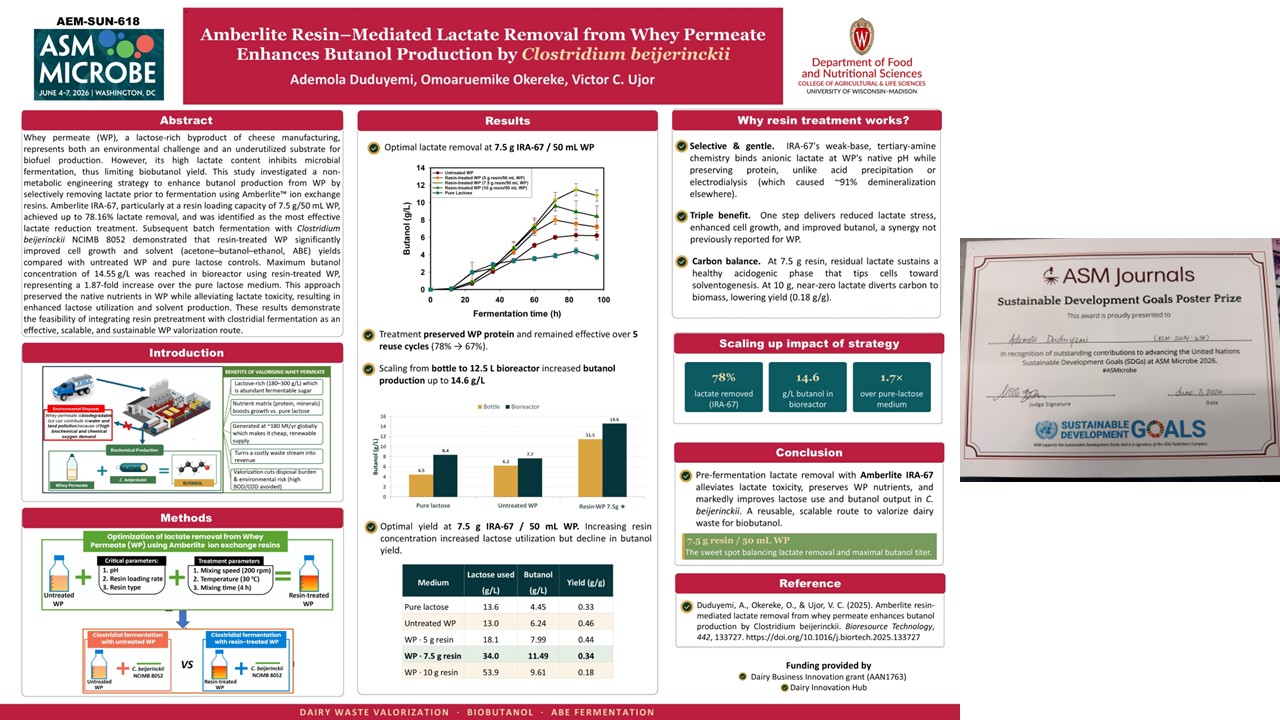
Organic agro- and industry-derived effluents—such as whey permeate, glycerol, and lignocellulosic biomass hydrolysates—represent promising, low-cost feedstocks for the bioproduction of value-added chemicals. Their abundance, renewability, and high organic content make them attractive substrates for sustainable biomanufacturing. However, their effective utilization is often constrained by inherent physicochemical and biological limitations. For example, whey permeate can exhibit low pH and elevated lactic acid levels; lignocellulosic hydrolysates frequently contain inhibitory aldehydes such as furfural and hydroxymethylfurfural (HMF); and glycerol metabolism may be limited by inefficient uptake pathways and restricted catabolic capacity in many industrial microbes.
A systematic understanding of these constraints is essential for unlocking the full potential of these substrates. To this end, we employ molecular, biochemical, and multi-omics approaches—including transcriptomics, proteomics, and metabolomics—to elucidate the cellular responses and regulatory networks underlying substrate inhibition, toxicity tolerance, and metabolic bottlenecks.
Guided by these insights, we rationally design and engineer superior biocatalysts with enhanced tolerance, substrate utilization efficiency, and metabolic flux toward desired products. Through pathway optimization, redox balancing, transporter engineering, and adaptive laboratory evolution, we develop robust strains capable of efficiently converting complex waste-derived feedstocks into fine chemicals and biofuels at improved titers, yields, and productivities.
Members
News