
Ultra-Processed Foods Unpacked
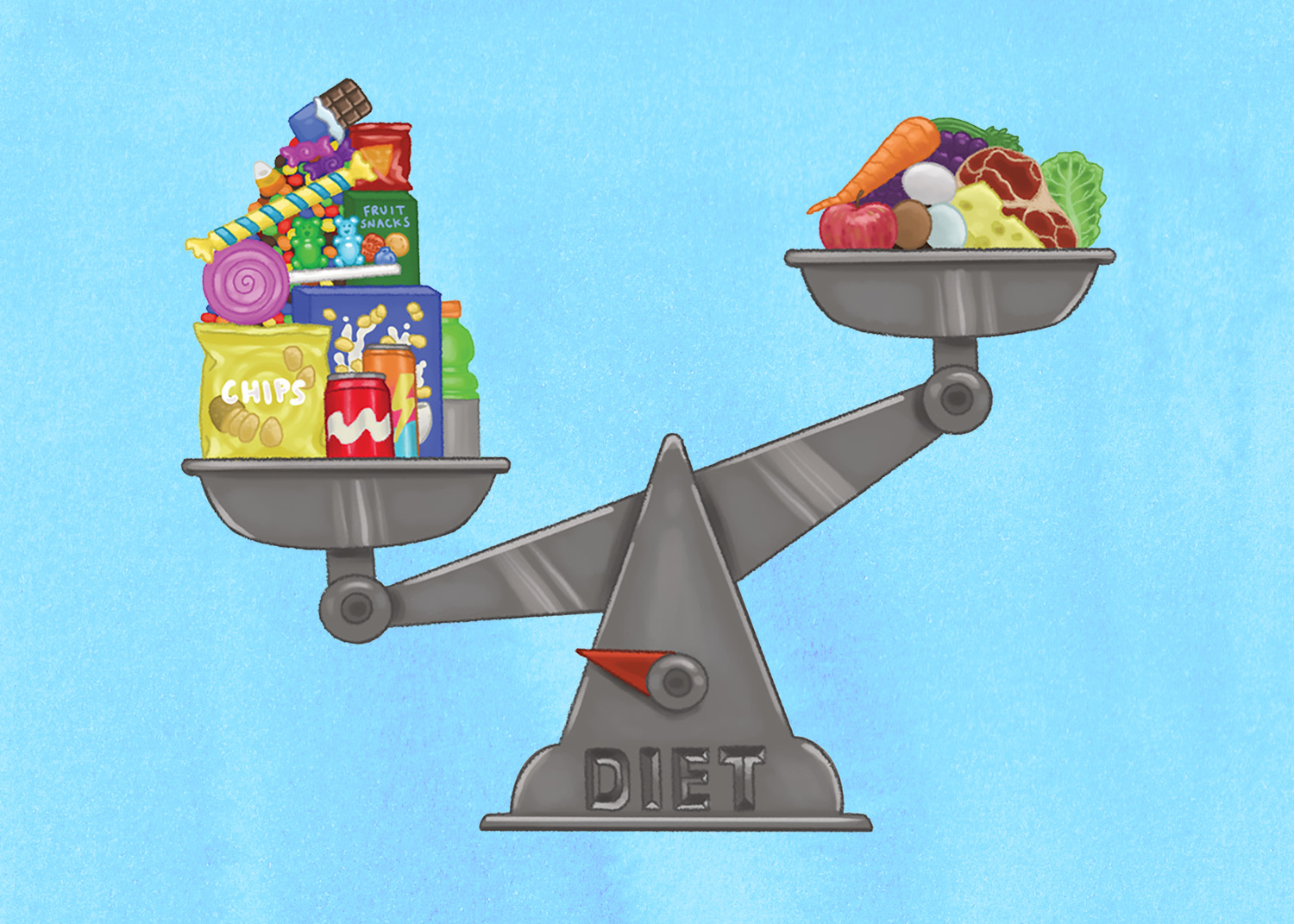
Story by Beth Olson BS’85, Illustration by Jordyn Vowels
Five key questions (and answers) about the highly processed food products that make up an ever-growing proportion of our diet.
Ultra-processed foods (UPFs) are a hot topic in research, and the term is making frequent appearances in the news, on social media, and in public health discussions. In the United States, public health groups, some states, and the federal government are calling for regulations and policy changes to reduce UPF consumption, a recommendation that’s being echoed globally. Here are some important UPF-related considerations for consumers.
1. Where did the term UPF originate?
UPF comes from a classification system developed by a team of public health and nutrition researchers. Called NOVA, the system sorts foods and ingredients into four groups: 1) unprocessed or minimally processed foods, such as fruits, vegetables, meat, plain dairy foods, rice, and pasta; 2) processed culinary ingredients (salt, sugar, oils, and solid fats); 3) processed foods made from groups 1 and 2, such as canned produce, cured meats, and homemade bread; and 4) ultra-processed foods.
2. How do we know if a product is a UPF?
There is no legal definition for a UPF, so you won’t find it on a food label. According to NOVA standards, “ultra-processed foods are formulations of ingredients, mostly of exclusive industrial use (that is, not found in a home kitchen) that result from a series of industrial processes.” UPFs have familiar ingredients (e.g., wheat or fruit) as well as chemical-based preservatives, sweeteners, such as high fructose corn syrup, and artificial colors and flavors. Examples include sodas and energy drinks, most store-bought breads, snack bars, crackers and chips, most ready-to-eat cereals, cookies and pastries, most processed meats, fruit yogurts, and fast foods.
3. Why should we care if we eat UPFs?
Long-term studies have shown that individuals eating the highest amounts of UPFs are more likely to develop diseases such as Type 2 diabetes, heart disease, and cancer. However, only a couple of UPFs are associated with disease: sugar-sweetened beverages and processed meats. It’s also unclear whether consuming a lot of UPFs or consuming less of more beneficial foods is what contributes to disease. (Think of the fiber and antioxidants in fruits and vegetables.) It’s also possible that UPFs are formulated to have flavors and textures that make them easy to overconsume, and they’re often more conveniently available in our time-crunched worlds.
4. How do we choose a healthy diet in a world of ubiquitous UPFs?
Healthy diets — those associated with better health outcomes — still include fruits and vegetables, whole grains, dairy or fortified soy products, and a variety of protein sources. Processed foods are convenient, often shelf-stable or freezable, and can help round out meals. These foods also have labels, and the nutrition facts panels and ingredient lists will let you choose the healthiest versions. For example, check whether a breakfast cereal is good source of fiber or has added sugars, or choose a frozen vegetable without added sauces.
5. What else should we consider when it comes to UPFs?
Calls to label UPFs and restrict access to them in government programs and healthcare settings are growing louder. That won’t necessarily make alternatives readily available to all. We should look at what we can do to change our food environment. Consider how government programs support the production of certain ingredients — how might we want that shifted? Can we support farm-to-school or farm to-food pantry programs? Can we provide incentives to bring stores and healthy products to communities that currently lack them? Without systemic changes, the impact of labeling or restricting UPFs will be limited.
Beth Olson is an associate professor and extension specialist in the Department of Food and Nutritional Sciences.